Tin Lead Solder Bar Type of Alloy:
| Alloy | Melting point (℃) | Working temperature (℃) |
| Sn63 / Pb37 | 183 | 240-250℃ |
| Sn60 / Pb40 | 183-190 | 250-260℃ |
| Sn55 / Pb45 | 183-203 | 260-280℃ |
| Sn50 / Pb50 | 183-215 | 280-300℃ |
| Sn45 / Pb55 | 183-227 | 280-320℃ |
| Sn40 / Pb60 | 183-238 | 290-330℃ |
| Sn35 / Pb65 | 183-248 | 300-350℃ |
| Sn30 / Pb70 | 183-258 | 320-350℃ |
| Sn25 / Pb75 | 183-266 | 320-350℃ |
| Sn20 / Pb80 | 183-279 | 320-350℃ |
| Sn15 / Pb85 | 227-288 | 320-350℃ |
| Sn10 / Pb90 | 268-301 | 320-350℃ |
| Sn5 / Pb95 | 300-311 | 360-400℃ |
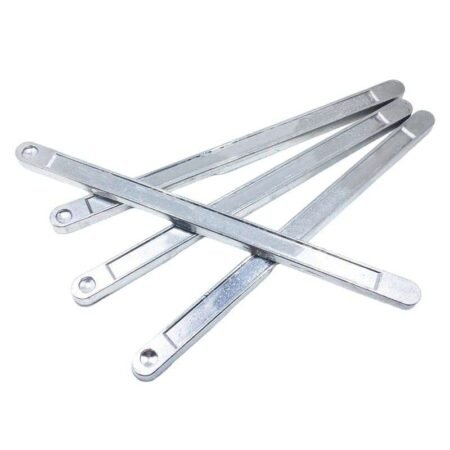
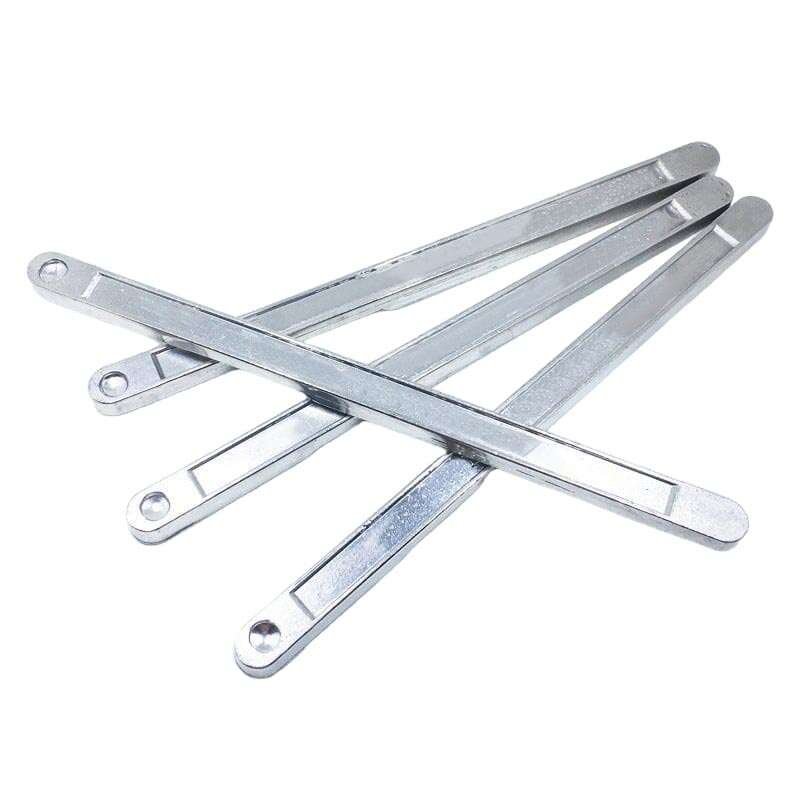
Basic information of Tin Lead Solder Bar:
Size: 31.5cm x 2cm x 1.5cm
Color: Silver
Applications of Tin Lead Solder Bar:
- For dip soldering or wave soldering of electronic products, such as PCBA
- Assembly of Copper roofing, flashing, etc
- Assembly of stained glass.
- Other tinning purpose.
Features of Tin Lead-Free Solder Bar:
- Eutectic alloy.
- Bridge-free and icicle-free soldering.
- Smooth, bright, well-formed fillets, free of gross micro-cracks, irrespective of the cooling rate.
- Good through-hole penetration.
- Good topside fillet formation.
- Dross rate equal to or lower than tin-lead solder.
- Does not require a nitrogen atmosphere.
- Does not erode copper from holes, pads, and tracks.
- The low rate of copper leaching makes it easy to control the copper content of the solder bath.
- Lower aggressiveness to stainless steel and other solder pot materials as compared to tin-silver-copper alloys.
- Thermal fatigue resistance and creep strength are better than tin-lead.
- Slow, even growth of the intermetallic layer at the solder/substrate interface.
- Also performs well in selective and dip soldering.